
The Hidden Cost of “Good Enough” Cooling
In fresh produce operations, cooling isn’t just a post-harvest step—it directly determines shelf life, shrinkage, transport stability, and ultimately profit. Yet many operations still rely on traditional forced-air cooling or flake ice, assuming they’re “good enough.”
They’re not always.
The real question isn’t what works—it’s what costs you less over time while preserving quality and margins.
Forced-Air Cooling: The Industry Default
How does it work?
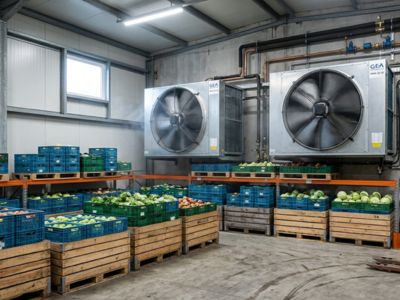
Cold air is circulated through stacked produce (often palletized), gradually removing field heat.
Where It Performs Well:
- Low upfront investment
- Suitable for hardy produce (potatoes, onions, squash)
- Easy to integrate into existing cold storage
The Real Cost Factors
1. Slow Cooling = Shorter Shelf Life: Air has low thermal conductivity. Cooling is slow and uneven, especially in dense pallets. This results in:
- Residual field heat
- Faster respiration rates
- Reduced shelf life
2. Moisture Loss = Shrinkage: Air cooling dehydrates produce:
- Weight loss (direct revenue loss)
- Visible quality degradation (wilting, shriveling)
3. Energy Inefficiency: Cooling air → cooling produce indirectly = higher energy consumption per unit cooled.
Flake Ice: Faster, But Not Perfect
How Does It Work?
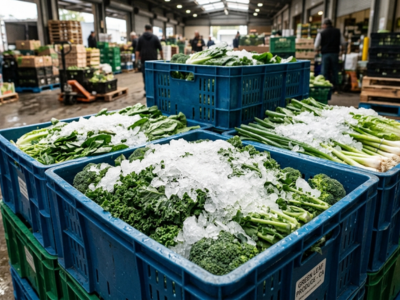 Ice is applied directly to produce (often in bins or cartons), cooling via contact and melt.
Advantages:
- Faster than air cooling
- Adds surface moisture
- Simple concept and widely used
The Trade-Offs
1. Uneven Cooling: Ice sits on top layers:
- Bottom layers often remain warm
- Leads to inconsistent product quality
2. Water Damage & Waste: As ice melts:
- Excess water → spoilage, rot risk
- Packaging damage
- Increased handling issues
3. Logistics & Labor Overhead
- Ice production, storage, transport
- Manual handling
- Meltwater management
4. Ongoing Operating Costs
- Water usage
- Ice machine maintenance
- Energy for freezing
The Overlooked Alternative: Slurry Ice (Flow Ice)
How Does It Work?
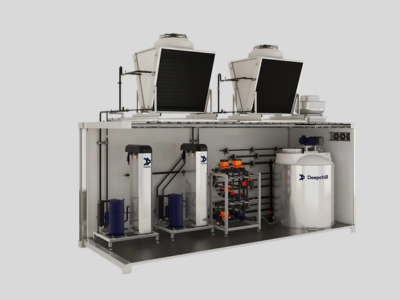
A pumpable mixture of micro-crystal ice and water flows around produce, creating full-contact cooling.
Why Does It Change Economics?
1. Rapid, Uniform Cooling
- 100% surface contact
- Eliminates hot spots
- Faster pull-down of field heat
2. Minimal Dehydration
- Maintains humidity
- Reduces shrinkage (protects sellable weight)
3. Lower Total Cost of Ownership: While capex may be higher than air systems:
- Reduced spoilage
- Lower energy per ton cooled
- Less labor vs flake ice
4. Better Product Quality
- Longer shelf life
- Improved firmness, color, and freshness
- Higher resale value
Cost Comparison (What Actually Matters)
| Factor | Forced-Air Cooling | Flake Ice | Slurry Ice |
|---|---|---|---|
| Cooling Speed | Slow | Medium | Fast |
| Cooling Uniformity | Poor | Moderate | Excellent |
| Moisture Retention | Low (drying) | High (but messy) | Optimal |
| Product Shrinkage | High | Moderate | Low |
| Labor Requirement | Low | High | Low |
| Energy Efficiency | Moderate | Low–Moderate | High |
| Shelf Life Impact | Reduced | Improved | Maximized |
What Does This Means Financially?
If you translate performance into dollars:
- 1–3% weight loss from air cooling = direct revenue loss
- Inconsistent cooling = rejected loads or discounted pricing
- Shorter shelf life = higher spoilage rates
Even a modest improvement in:
- Shelf life (2–4 days)
- Shrinkage reduction (1–2%)
- Quality consistency
…can translate into tens of thousands annually for mid-sized operations.
When Each Method Makes Sense?
Use Forced-Air Cooling if:
- You handle low-value or durable crops
- Capex constraints are tight
- Speed and precision are less critical
Use Flake Ice if:
- You need quick surface cooling
- Product tolerates water exposure
- Labor costs are manageable
Consider Slurry Ice if:
- You handle high-value perishables (leafy greens, seafood, berries)
- You want to reduce shrinkage and extend shelf life
- You’re optimizing for long-term ROI, not just upfront cost
Bottom Line
Cooling isn’t a cost center—it’s a margin lever.
- Air cooling saves money upfront but leaks profit through shrinkage and inconsistency
- Flake ice improves speed but adds operational friction and waste
- Slurry ice shifts the model: higher efficiency, better quality, and stronger margins
If you’re scaling operations or exporting produce, the question isn’t “what’s cheapest?”—it’s:
“Which system protects the most revenue per load?”
Ready to Upgrade Your Cooling Efficiency?
If you’re evaluating ways to reduce shrinkage, improve product quality, and increase profitability, it’s worth exploring advanced slurry ice systems from Deepchill.
With 45+ years of expertise, 2,000+ installations, and systems operating in 40+ countries, Deepchill specializes in high-performance slurry (flow) ice technology designed for produce, seafood, and industrial applications.
Get in touch with Deepchill today to:
- Assess your current cooling method
- Calculate ROI based on your operation
- Explore customized slurry ice solutions
👉 The right cooling system doesn’t just preserve produce—it protects your margins.